RISC-V GEMM Performance Summary
Comparison of DGEMM (Double) and SGEMM (Single) across Vector Targets (Matrix Sizes 256-4096)
Copyright 2025


OpenBLAS Version Under Test
Benchmarks were captured from OpenBLAS 0.3.30 (official release), which was released on June 19, 2025.
How to Run the Benchmark
Detailed guidelines for running these benchmarks and collecting performance data are described in the benchmark.md documentation.
We invite you to read the benchmark guide to learn how the data presented in this report were collected, including build configurations, runtime parameters, and measurement methodologies.
Benchmark Environment

Fedora 42 Remix
Released by the Fedora-V Force team.
Download link: images.fedoravforce.org
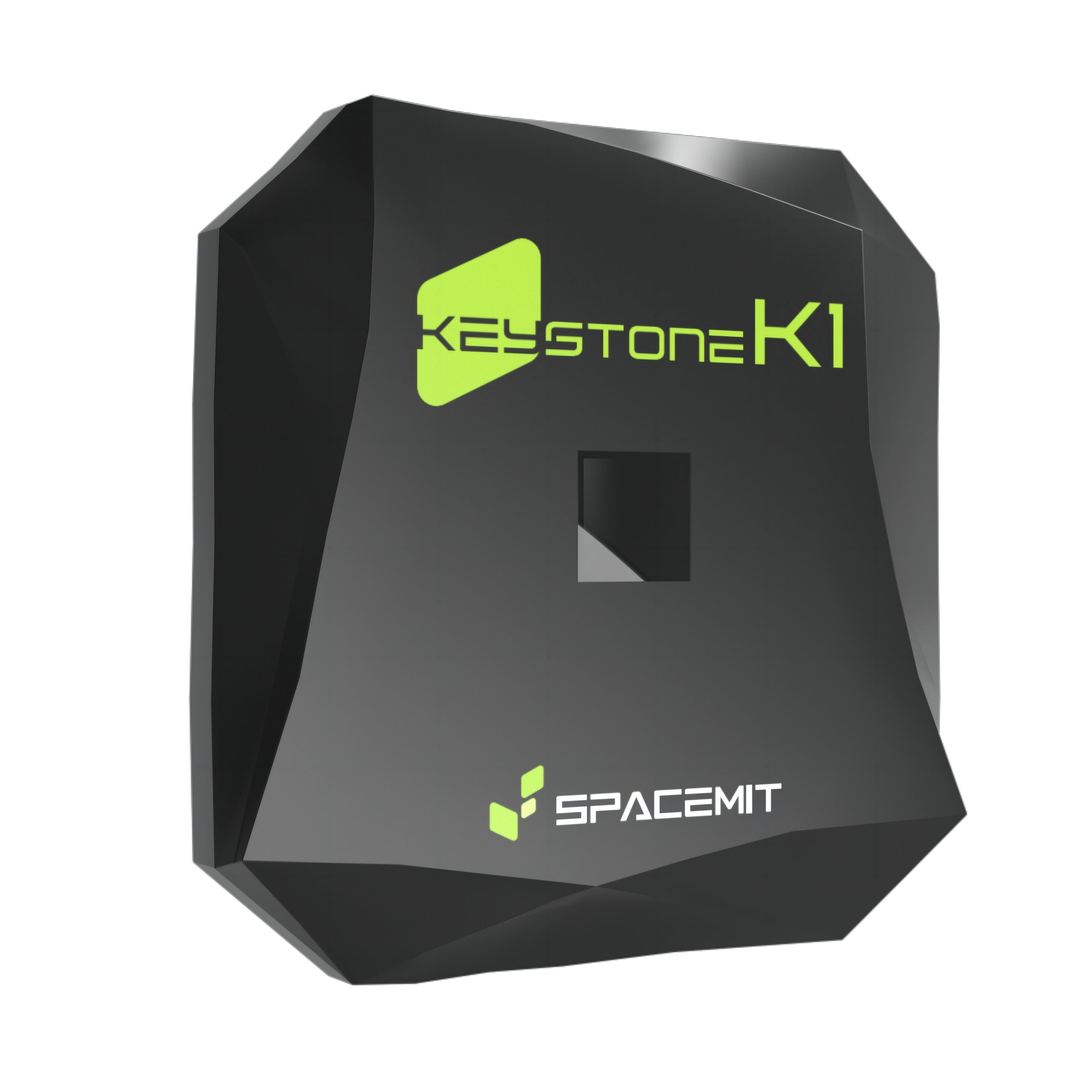
K1 SoC (RISC-V)
Manufactured by SpacemiT.
CPU: 8 cores, model Spacemit® X60.
ISA Profile:
rv64imafdcv_zicbom_zicboz_zicntr_zicond_zicsr_zifencei_zihintpause_zihpm
zfh_zfhmin_zca_zcd_zba_zbb_zbc_zbs_zkt_zve32f_zve32x
zve64d_zve64f_zve64x_zvfh_zvfhmin_zvkt_sscofpmf_sstc
svinval_svnapot_svpbmt
MMU Mode: sv39.
Theoretical Performance Analysis
K1 SoC Vector Register Architecture (256-bit VLEN)
Single Precision (32-bit): 8 elements per vector register
Double Precision (64-bit): 4 elements per vector register
Note: K1 SoC (Spacemit® X60) implements the RISC-V Vector Extension with VLEN=256 bits, supporting both single and double precision floating-point operations through the RVV instruction set.
Key Findings
1. Practical vs. Theoretical: Performance Gap, Current RVV implementations achieve only 39-48% of theoretical peak
- SGEMM: 3.1x actual speedup vs 8x theoretical = 38.9% efficiency (35,989 vs 11,546 MFLOPS on ZVL256B)
- DGEMM: 1.9x actual speedup vs 4x theoretical = 47.5% efficiency (15,857 vs 8,175 MFLOPS on ZVL256B)
- DGEMM better utilizes available vector parallelism
- Implication: Limitation could be in memory bandwidth, register pressure, and kernel design. SGEMM's 8-wide operations likely face more severe register pressure and memory bandwidth bottlenecks on the K1 platform
2. Vector Length (VLEN) Gain: Longer is better, But, doubling Shows Diminishing Returns
- ZVL256B vs ZVL128B gains fall short of 2x
- SGEMM: ZVL256B achieves only 1.22x over ZVL128B (should be ~2x if perfectly scaling)
- DGEMM: ZVL256B achieves 1.37x over ZVL128B (also below ideal 2x)
- Key insight: Memory subsystem bandwidth, not compute capacity, is the primary bottleneck for GEMM on K1 — wider vectors can't be fed fast enough
3. For computing intensive kernels, i.e. GEMM, LMUL provides minimal benefit and sometimes hurts performance
- Only benefit: DGEMM on ZVL128B sees modest 8% improvement with LMUL=4, compensating for narrow 128-bit vectors
- Matrix-size dependency: LMUL=2 shows 11% gain for SGEMM ZVL128B at 256×256 (22,805 vs 20,482 MFLOPS) but 3% degradation at 4096×4096 (28,696 vs 29,451 MFLOPS)
- Consistent degradation: Higher LMUL shows 2-3% performance loss at large matrix sizes (4096×4096) in 3 out of 4 configurations (DGEMM ZVL256B, both SGEMM cases)
- Root cause: Increasing LMUL multiplies architectural register count but creates register pressure, limiting the compiler's ability to keep critical values in registers and forcing more memory traffic
Critical Recommendation: Matrix-Size Adaptive Tuning
For production deployments on K1, implement matrix-size adaptive LMUL selection:
- Small matrices (<1024): Use
LMUL=2 - Large matrices (≥1024): Use
LMUL=1 - Exception - DGEMM ZVL128B: Always use
LMUL=4(8% gain)
Impact: This strategy maximizes performance across all matrix sizes by balancing register pressure and computational throughput.
LMUL Analysis Summary:
At 4096×4096 (large matrices):
- DGEMM ZVL128B: LMUL=4 (11,552 MFLOPS) vs LMUL=1 (10,686 MFLOPS) = 1.08x gain
- DGEMM ZVL256B: LMUL=2 (15,388 MFLOPS) vs LMUL=1 (15,857 MFLOPS) = 0.97x (3% slower!)
- SGEMM ZVL128B: LMUL=2 (28,696 MFLOPS) vs LMUL=1 (29,451 MFLOPS) = 0.97x (3% slower)
- SGEMM ZVL256B: LMUL=2 (35,813 MFLOPS) vs LMUL=1 (35,989 MFLOPS) = 0.995x (0.5% slower)
At 256×256 (small matrices):
- DGEMM ZVL256B: LMUL=2 (12,243 MFLOPS) vs LMUL=1 (12,536 MFLOPS) = 0.98x (close)
- SGEMM ZVL128B: LMUL=2 (22,805 MFLOPS) vs LMUL=1 (20,482 MFLOPS) = 1.11x gain! 📈
Loading and analyzing data...